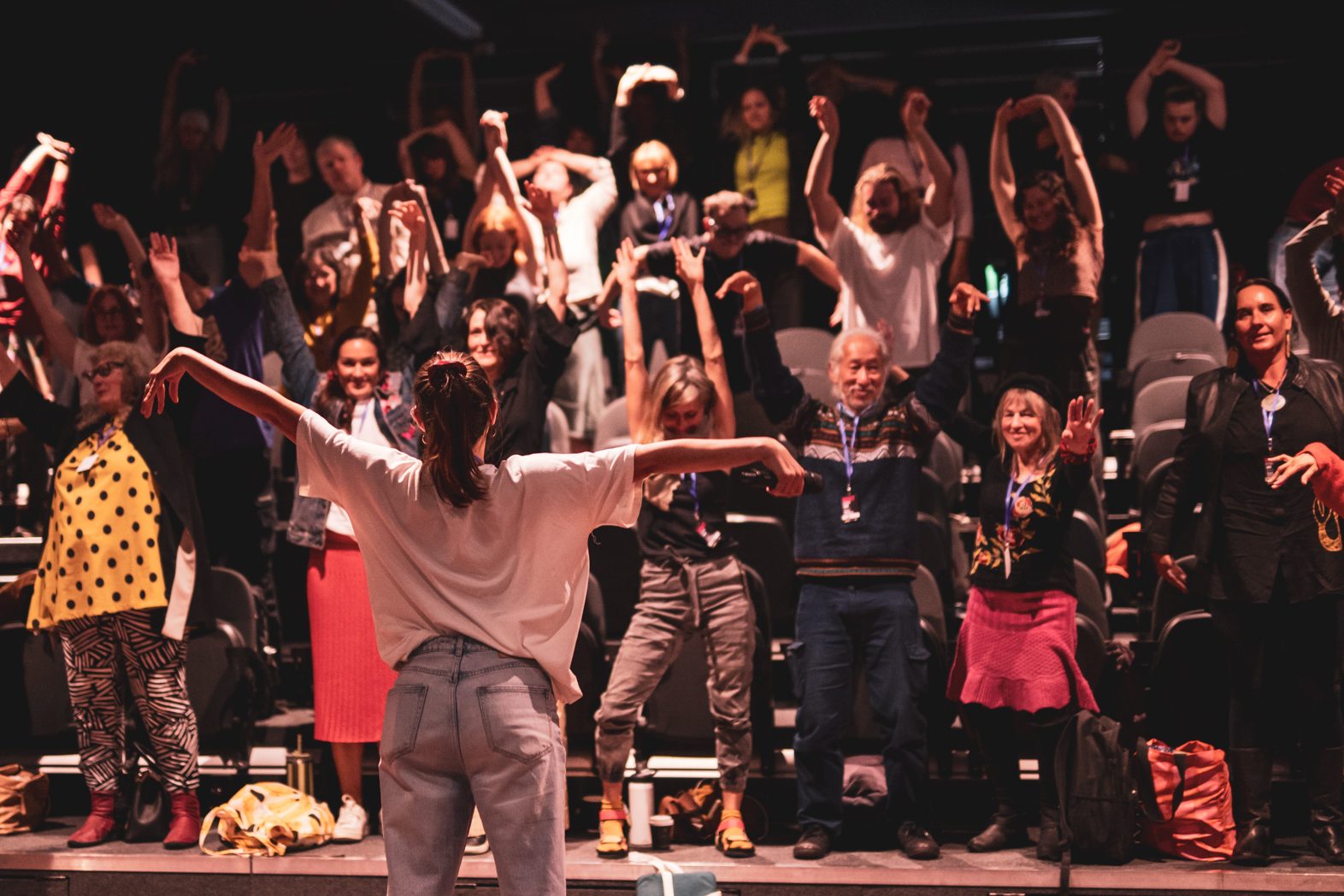
Regional dance artists came together in August to share their work, talk honestly about the challenges they face and consider what needs to change. The conversation is continuing, with opportunities to build stronger connections and advocate for the future of dance across regional NSW.
On 28 August 2026, artists, producers, presenters, First Nations leaders and funding representatives gathered at Warners Bay Theatre, baramayiba, for DANCE DIALOGUES: Outside the City, Beyond the Limits. Regional NSW is a big place and artists work in very different circumstances.
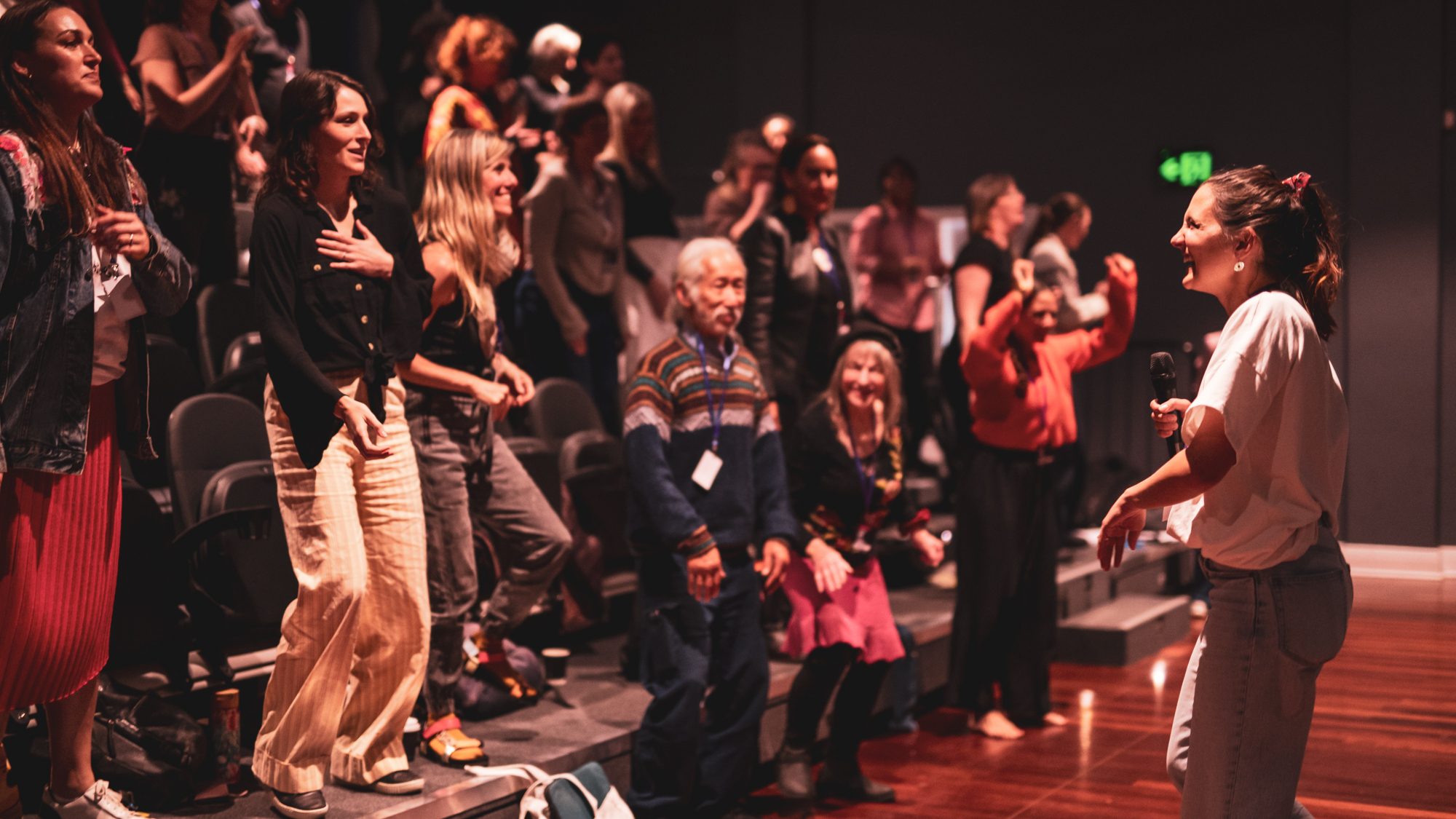
There were no simple answers, but there was a clear sense that people needed the chance to meet, share experiences and talk about what was really happening in their part of the sector.
I think these events will always strengthen my connections with the industry and my knowledge of it. It’s always a wonderful capacity building event for me as well as making me feel part of something larger than myself doing it alone. Katina Olsen (NAISDA)
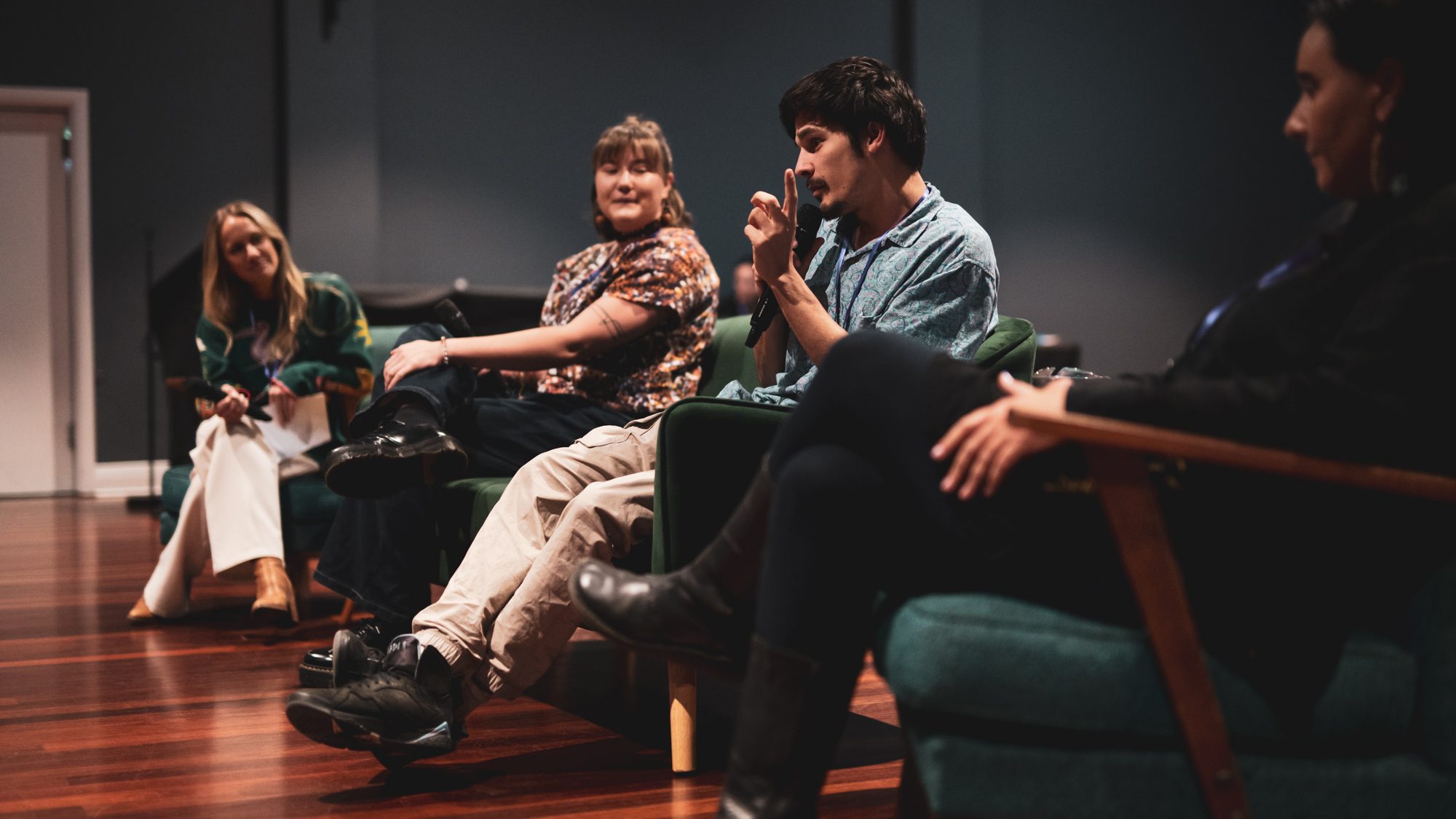
First Nations Panel: (L-R) Moderator: Katina Olsen (Wakka Wakka / Kombumerri), Erica Dixon (Gomeroi), Kiarn Doyle (Dunghutti) and Belle Budden (Wakka Wakka) | Photo: Pippa Samaya
A strong and diverse regional sector
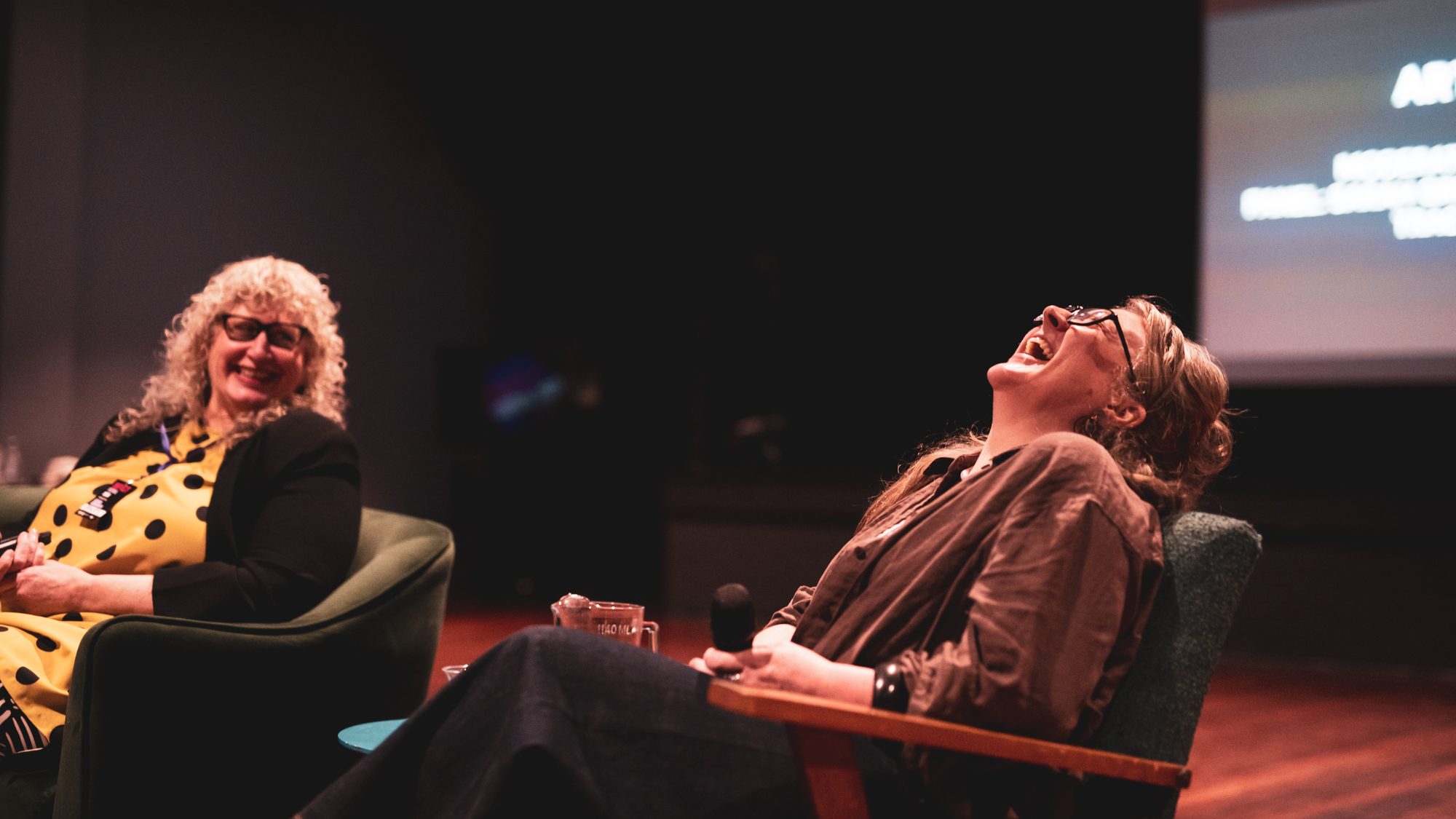
Facilitated by Sandi Woo, the programme included panels on First Nations Regional Leadership, Relationship Building & Community Practice curated by NAISDA, Arts Policy with updates from Creative Australia, Create NSW and Regional Arts NSW. Other sessions included discussions around Value & Visibility and Presenting & Touring.
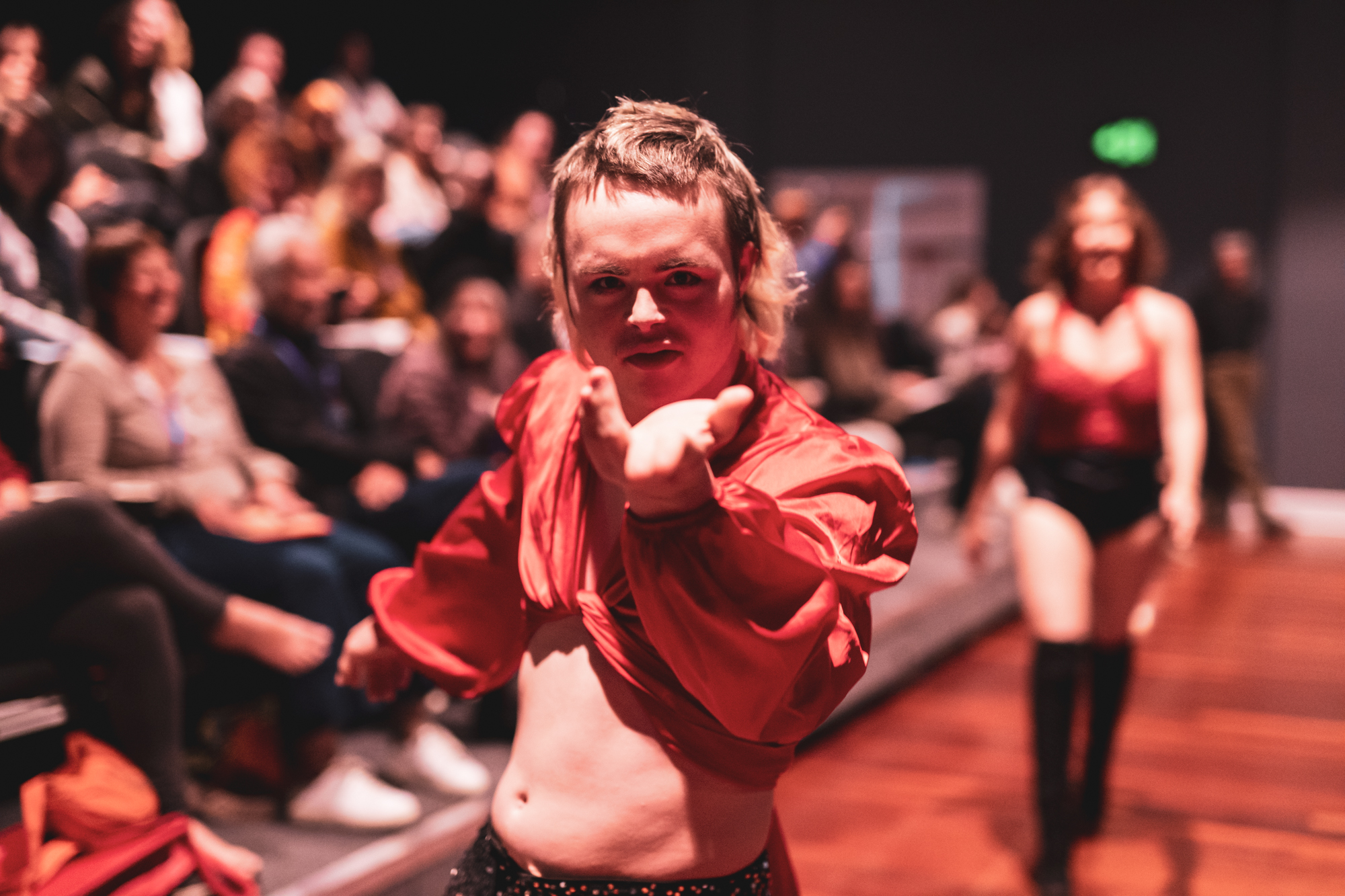
The program also featured 14 live artist spotlights in the theatre, alongside 24 digital spotlights presented on screen in the foyer. Together, they showcased the breadth and quality of dance being made across regional NSW, with artists and organisations represented from the Bega Shire, Illawarra, Blue Mountains, Mid North Coast and the Northern Rivers region.
The live spotlights featured Neville Williams-Boney, Catapult Dance Choreographic Hub, PH(R)ASE, Wagana Dancers, Fling Physical Theatre, Geraldine Balcazar Cabrera, Strings Attached, Kinship Doobai Dancers, Kristina Chan, Spaghetti Circus, Australian Dance Party, Golden Thursdays, Renata Commisso, and Jade Dewi Tyas Tunggal & Kirk Page.
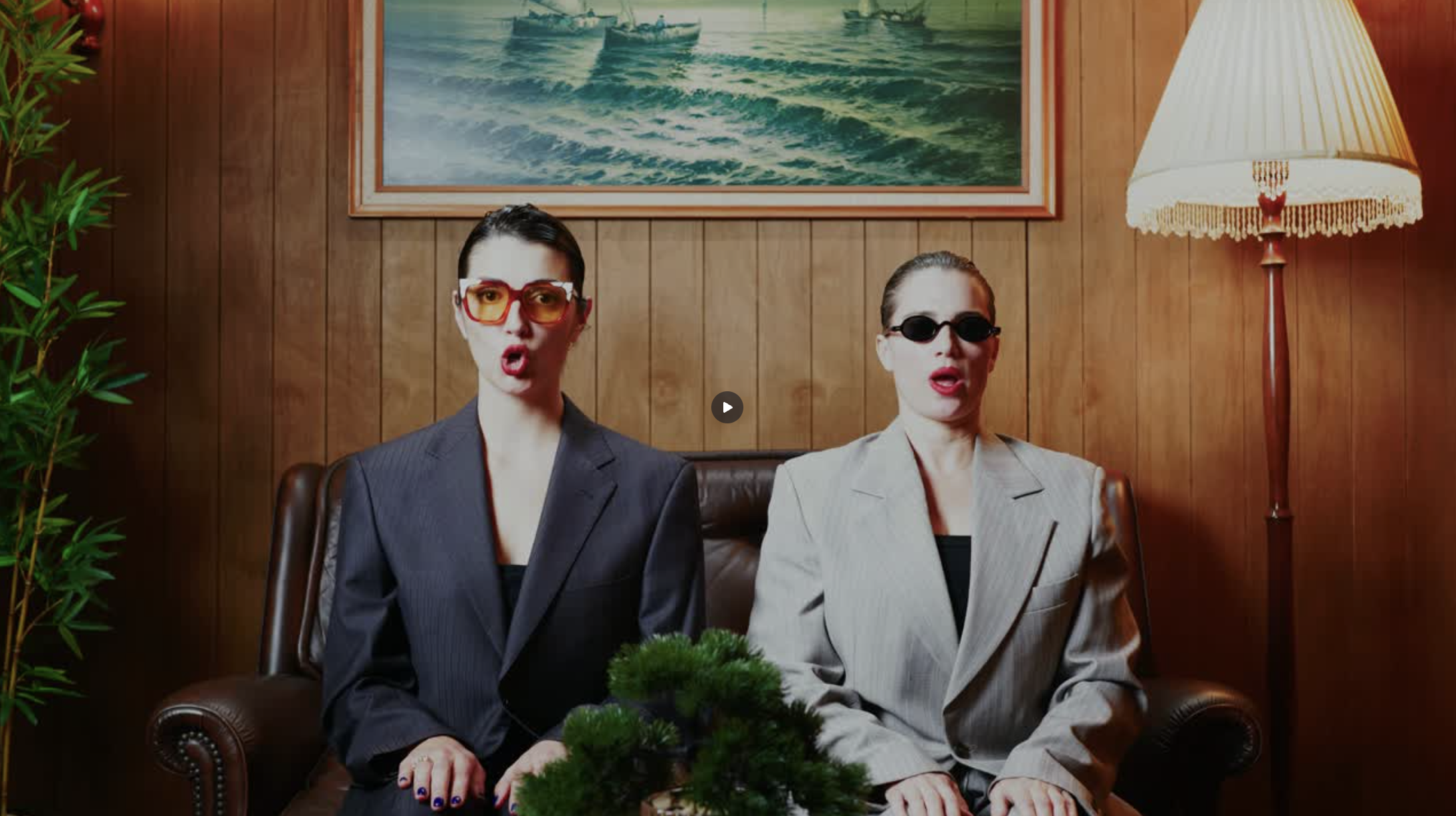
Digital Spotlight: We Are Hot Mess – Sophie May & Gabrielle Miller | Photo: Ben Taylor (Goliath Productions)
The digital spotlights extended that picture featuring: We Are Hot Mess, Jessie Carson & Stephanie Benson, Lillian Star, WOJAK, Dance Integrated Australia, Julie-Anne Glur: with Flourish, Paul Walker, Noa Rotem, Colleen Coy, Raji Renshaw: Upside Down Arts, Diana A. Zamudio Diaz, Got Ya Back Productions, Suara Dance, Briefs Factory International, Issie Hart and Angourie Dance Company alongside artists and companies also featured in the live programme.
The Northern Rivers had a particularly strong presence with six of the 14 live spotlights and 17 digital spotlights from the region. This reflects the depth of creative practice in the area and provides an opportunity to build on the relationships and momentum developed through the Dance Sector Uplift work following the catastrophic 2022 floods.
As one participant put it:
We are a thriving and incredible sector – tenacious, strong and producing work that matters.
Spotlight: Golden Thursdays’ (L-R) Bryn James, Stuart Shugg & Kate McDowell | Photo: Pippa Samaya
Why connection matters
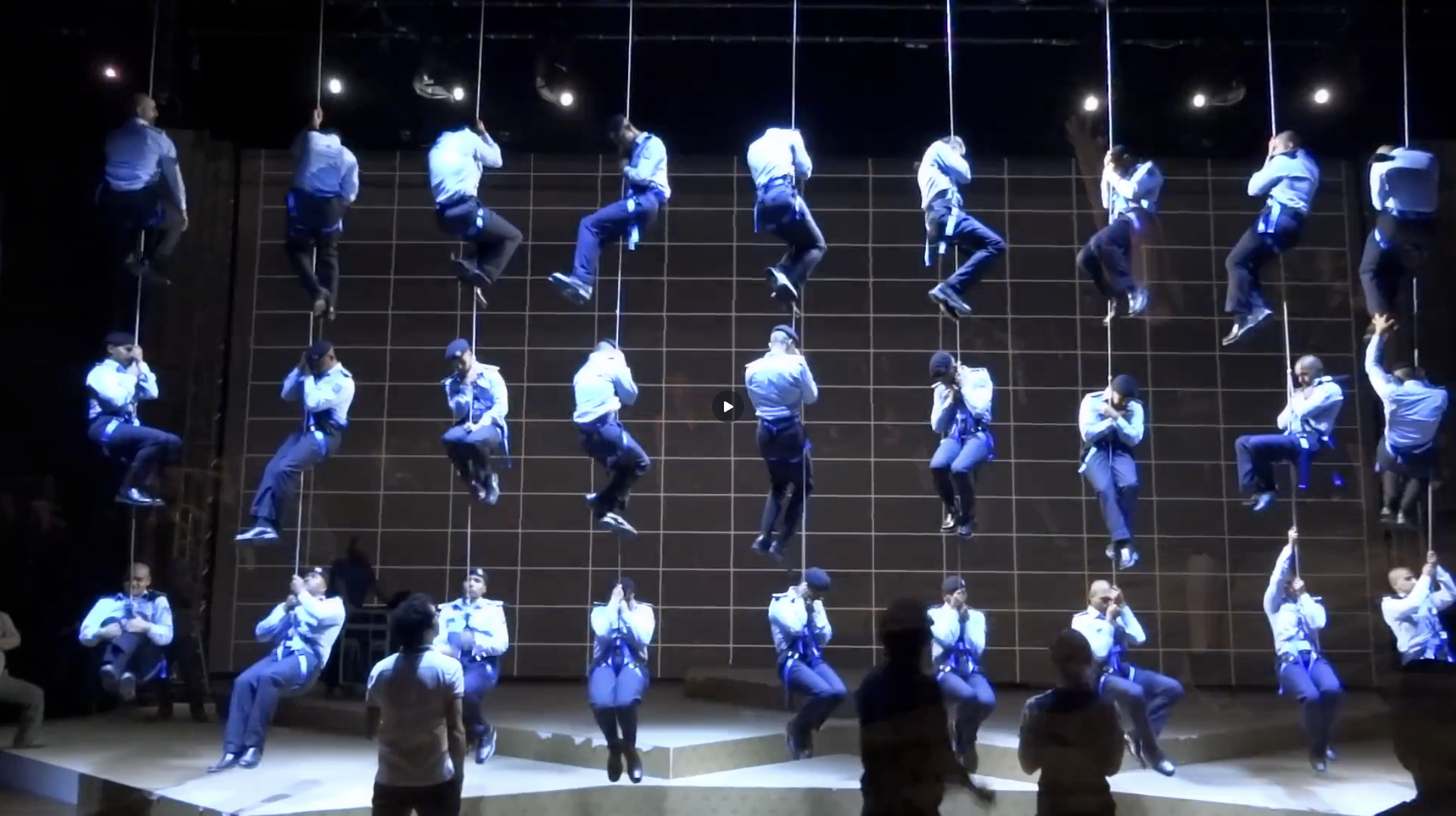
Across the day, discussions explored the practical realities of working independently in regional NSW. People came from more than 20 communities, highlighting how much activity is happening across a wide geographical area. Many artists have established relationships interstate and internationally, including Lee-Anne Litton and Alejandro Rolandi from Strings Attached who are based in the Hunter region of New South Wales, which is situated on the lands of the Wonnarua Nation. Strings Attached is a project-based performance practice creating aerial and physical theatre works.
Strings Attached: Arab Nations Celebrations: Wall of Firemen, Kuwait
Lee-Anne Litton described what made the day matter:
DANCE DIALOGUES rekindled old relationships, seeded new ones, and wove connections across the spectrum of the sector — from emerging dancers and producers to colleagues, mentors and peers. It opened up a renewed sense of connection and possibility and reminded me how much can grow when we create the space to reconnect and come together. Lee-Anne Litton (Strings Attached)
The evaluation showed just how valuable it was for people to come together. All respondents rated the opportunity to connect as either extremely valuable (82.35%) or very valuable (17.65%). Everyone who responded also reported feeling more connected to the sector afterwards, with 63.6% saying they felt much more connected.
First Nations leadership was another important part of the programme. One participant reflected on the value of hearing directly from First Nations artists and producers:
As a producer that is not formally trained as a dancer, but a lifetime of cultural and community service, I was strengthened and inspired by DANCE DIALOGUES. The biggest takeaway was an awareness outside the region, connecting with other regionally based dancers helped me to see opportunities outside the region. I was inspired by the incredible quality of dance in the regions. Belle Budden (Kinship Doobai Dancers)
The conversations also highlighted the conditions needed for artists to keep working. As another reflection from the evaluation put it:
What sustains dance is not simply more production, but the relationships, networks, and conditions that allow practices and people to continue.
Raji ‘Rockstar’ Renshaw: Upside Down Arts | Photo: Pippa Samaya
Access comes at a cost
Travel is part of the problem. Requests for travel bursaries exceeded $14,000, while just $5,000 of the project’s $16,000 total budget, funded by Creative Australia, was allocated to support regional artists to attend.
The gap gives some indication of the cost of bringing artists from across NSW into the same room. Bursary recipients travelled from the South Coast, Illawarra, Blue Mountains, Mid North Coast and Northern Rivers. If we want people from across the state to take part in these conversations, access needs to be considered from the beginning.
Keeping the conversation going
The online gathering was a practical next step. The first Regional NSW Dance Sector Network Gathering took place on 16 October, with 55 people registered. Facilitated by Philip Channells and supported by Regional Arts NSW, it showed there is real interest in staying connected across the state.
Conversations with Regional Arts NSW are continuing about establishing a regular sector gathering that can help regional dance artists build relationships, share knowledge and develop a stronger collective voice to advocate for dance across NSW.
Spotlight: Renata Commisso | Photo: Pipa Samaya
There may also be an opportunity to take these conversations back into regional communities. With such a strong Northern Rivers presence at DANCE DIALOGUES, a future gathering in the region could be an interesting next step. It could build on the relationships developed through the Dance Sector Uplift work and create more opportunities for artists to connect across the region.
There is also potential to explore connections across the NSW and South East Queensland border. Organisations and events such as the National Circus Festival, Karul Projects, The Farm, Everybody NOW!, HOTA and BLEACH Festival could offer opportunities for future conversations about collaboration, presenting work and the needs of artists across the region. These are possibilities to explore, rather than established partnerships.
There is an opportunity to carry the discussion into policy, too. A submission is now being presented to Create NSW to inform the new performing arts strategy. This work sits alongside Heartland: A Plan for Regional NSW Arts, Culture and Creative Industries 2026–2035, which identifies stronger regional partnerships and networks as a priority.
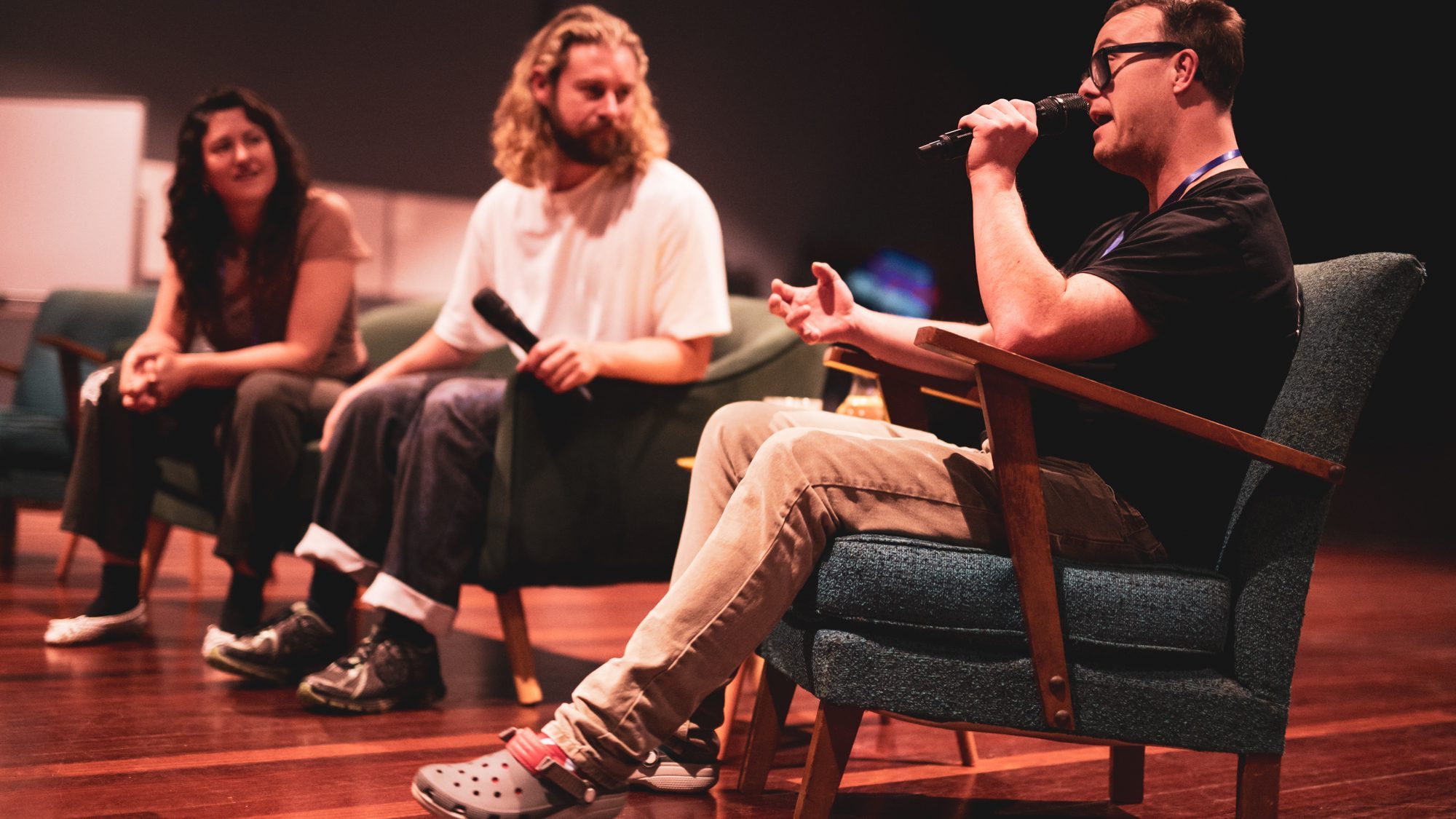
Arts Policy Panel: (L-R) Tracie Callinan (Regional Arts NSW) & Sarah Greentree (Creative Australia) | Photo: Pippa Samaya
One respondent wrote:
I found Tracey Callinan’s insights into cultural policy, and impacts of which party is in government, very insightful. I’d love more discussion and information on this as it directly affects you, the artist.
There is plenty of knowledge in the regional dance sector. Artists know what is happening in their communities. They know where the gaps are and many are already finding ways to address them. They need to be included when decisions are made about the future of the performing arts. DANCE DIALOGUES was one step in that process. The next test is whether these conversations lead to changes people can see and feel in their working lives. Regional dance is already happening. The artists are there, and so is the work. Now we need to make sure the support is there too.
DANCE DIALOGUES: Outside the City, Beyond the Limits was proudly supported by Creative Australia, Create NSW, Catapult Dance Choreographic Hub, Dance Integrated Australia, NAISDA and Fling Physical Theatre.